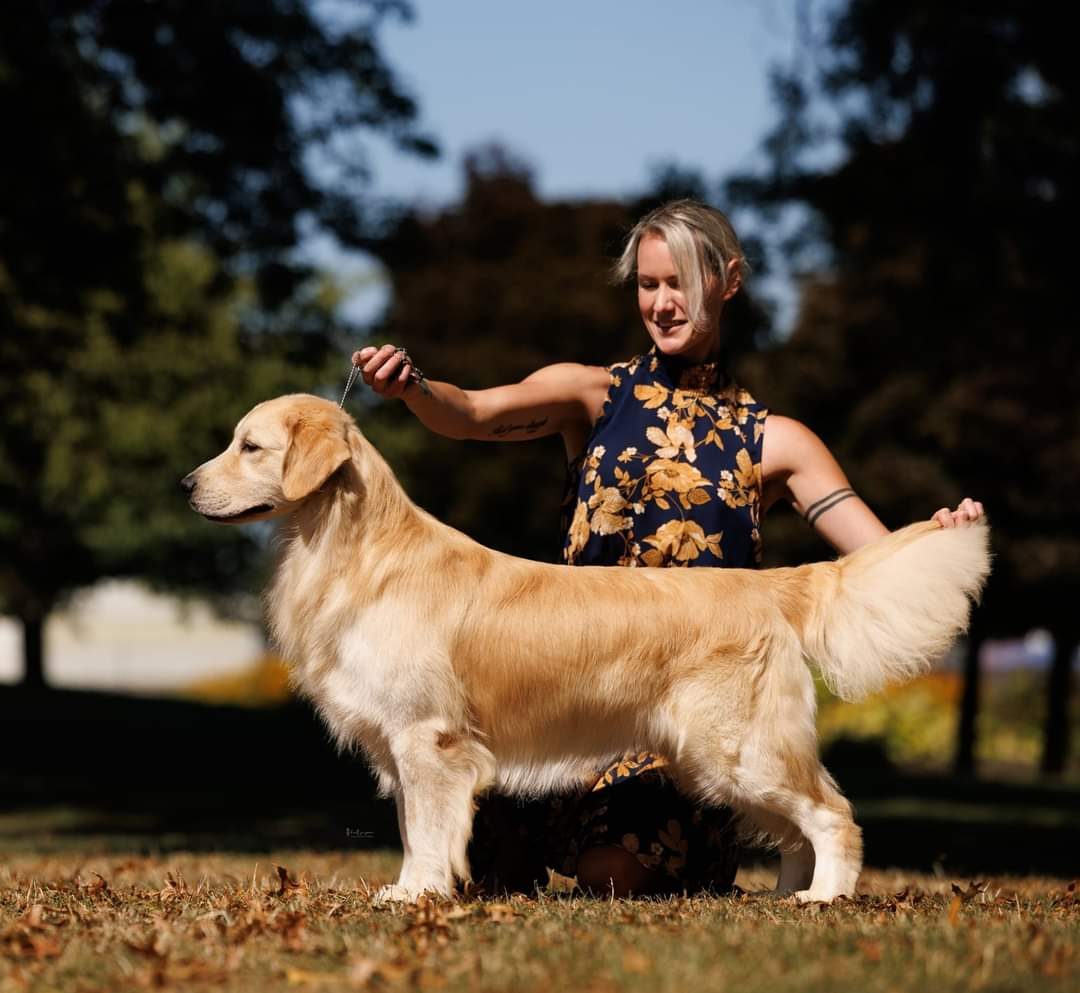
Ask people why anyone would seek out a purpose-bred dog and you’ll hear guesses about looks, status, even snobbery. The real answer is almost always something much humbler:
They needed to know.
Needed to know the dog would top out at twenty-five pounds, because the lease says so. Needed to know the coat wouldn’t trigger their son’s allergies before they fell in love, not after. Needed to know the temperament could handle a toddler’s ambush hug, or a veteran’s panic attack at 3 a.m., or eight quiet hours while the owner works.
In survey research on prospective dog owners, 86% prioritized predictable temperament in choosing a dog. That number shouldn’t surprise anyone. A dog is a fourteen-year commitment; wanting to know what you’re committing to isn’t shallow — it’s the opposite.
Predictability is inherited capital
Here’s what’s easy to miss: that knowledge exists only because someone built it. When a breed reliably produces a biddable, human-focused, soft-mouthed family dog, that reliability is the compound interest on generations of recorded decisions — temperament evaluated, structure assessed, health screened, results written down, and the next pairing chosen accordingly.
A breed is, in a real sense, a promise kept for a hundred years. “This dog will be this kind of dog” — and the promise holds because stewards kept receipts.
Where predictability is life and death
For most families, a mismatched dog means heartbreak. For some work, it means failure with stakes:
- Service dogs. Guide work, mobility work, medical alert — organizations invest a year or more per dog, and wash-out is expensive in time a disabled handler doesn’t have. They breed their own lines or source purpose-bred stock, because predictability is the product.
- Detection and working dogs. A 2021 Naval Postgraduate School report found that roughly 90% of America’s military working dogs were bred overseas — a supply-chain dependency serious enough that researchers recommended federal support for domestic breeding programs. The dogs guarding bases and finding explosives are purpose-bred, every one, because nothing else delivers the temperament and drive on spec.
- Therapy, search-and-rescue, allergy-compatible placements. Different jobs, same logic: the work needs a known dog.
The welfare argument nobody makes
Failed placements are one of the engines of shelter intake — dogs surrendered because they got bigger, shed more, needed more, or simply were more than the family understood. Roughly 30% of shelter dog intake is owner surrender.
Predictability attacks that failure at the source. A family that knows what it’s getting — because the breeder knew what they were producing, and matched dog to household on purpose — is a family that keeps the dog. Add the preservation breeder’s take-back contract underneath it as a safety net, and you have a system designed so that no dog from that program ever needs a shelter at all.
That’s not marketing. That is the actual machinery of it. Predictability isn’t a luxury feature of well-bred dogs. It’s a kindness — to the dog, to the family, and to the shelter worker who never has to meet either one.
Carry the message Every Bred By Co. piece funds this education work.
Shop Bred By Co.