Every breed exists on purpose.
Behind every recognized breed is an original job and a written standard kept by its parent club. This is the plain-language version — where each breed came from, and what it was for. 33 breeds and growing, toward all of them.
33 breeds shown
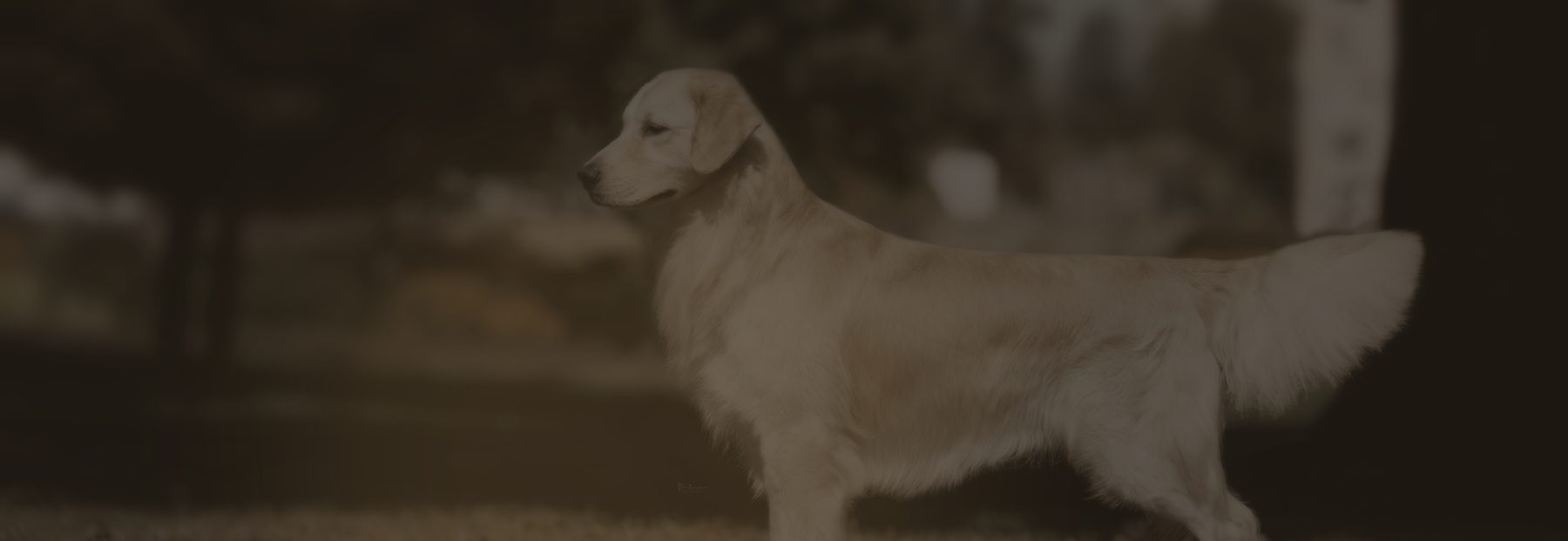
Sporting Group Golden Retriever Retrieving waterfowl and upland game
Origin: Scottish Highlands, 1860s
Bred at Guisachan estate by Dudley Marjoribanks (Lord Tweedmouth), who spent decades crossing a yellow retriever with the now-extinct Tweed Water Spaniel toward one goal: a dog that could work the rough Highland terrain and cold water all day, deliver a bird to hand undamaged, and do it because it wanted to please you. Every hallmark of the breed is that job written into flesh — the water-shedding double coat, the soft mouth, the biddable, human-focused temperament. The Golden's famous gentleness isn't an accident of cuteness; it is a working trait, selected on purpose, for a century and a half.
Read the official standard →Sporting Group Labrador Retriever Retrieving fish and fowl from cold water
Origin: Newfoundland, Canada → England, early 1800s
Before it was America's family dog, the Lab was a fisherman's dog in Newfoundland — hauling nets, retrieving escaped fish, working in water cold enough to kill. English sportsmen refined the St. John's water dog into a gun-dog of legendary reliability. The otter tail is a rudder; the dense, oily coat is a wetsuit; the famous appetite kept a working dog fueled in the cold. Its steadiness under distraction — the trait that later made it the world's premier guide and service dog — was bred for a duck blind first.
Read the official standard →Sporting Group German Shorthaired Pointer Versatile hunting — point, retrieve, track, on land and water
Origin: Germany, mid-1800s
Where British sportsmen kept specialists — one dog to point, another to retrieve — German hunters wanted one dog for everything: point upland birds, retrieve from water, track wounded deer, and guard the game bag at day's end. The GSP is that ambition realized: webbed feet, a water-resistant coat, a nose rated among the best in dogdom, and an engine that does not quit. The breed's intensity at home is the same intensity that made it Germany's do-everything gun dog. It was never meant to do nothing.
Read the official standard →Sporting Group English Springer Spaniel Springing (flushing) game birds for the gun
Origin: England, refined by the 1800s
The springer is named for its job: to quarter the field ahead of the hunter and 'spring' birds into flight — then sit, mark the fall, and retrieve to hand. From the old land-spaniel stock of England, springers were the larger pups in litters that also produced cockers; the split became formal in 1902. The breed's merry, driving tail and tireless quartering pattern are the visible mechanics of the work, and its deep attachment to its person comes from a job done never more than a gunshot away from them.
Read the official standard →Sporting Group Brittany Pointing and retrieving upland birds — the poacher-sized gun dog
Origin: Brittany, France, 1800s
Bred by French peasants and, the stories say, poachers — people who needed one modest-sized dog that could point, retrieve, and be fed on a working family's budget. The Brittany is the smallest of the pointing breeds and among the most efficient: leggy, light-boned, quick over ground, with an all-day motor in a 35-pound frame. Its size was economy; its versatility was necessity. It remains the working proof that greatness in a gun dog was never about being big.
Read the official standard →Hound Group Beagle Trailing rabbit and hare in packs, followed on foot
Origin: England, centuries old; standardized 1800s
The Beagle is the foot-hunter's hound: small enough to follow without a horse, voiced so the hunter could hear the chase unfold in cover, and packed with perhaps the most celebrated nose-per-ounce in dogs. Everything about it is pack engineering — the merry, quarrelless temperament that lets twenty strange hounds work as one, the white-tipped tail that flags position in brush, the single-minded devotion to a scent line. That devotion is why a Beagle 'doesn't listen' off leash. It is listening — to the ground.
Read the official standard →Hound Group Dachshund Going to ground after badger
Origin: Germany, 1600s onward
Dachshund means 'badger dog,' and the badger set the spec: a fierce, self-reliant hunter shaped to follow one of Europe's most dangerous burrow animals underground and fight it in the dark. The long, low body is tunnel geometry; the loose skin lets it turn in a tight earth; the deep chest carries lungs for work below ground; the loud, hound-deep bark told the digger above where the action was. The famous stubbornness is the job too — no dog that asks permission survives a badger sett.
Read the official standard →Hound Group Basset Hound Slow, deliberate trailing of rabbit and hare on foot
Origin: France, 1500s onward
'Bas' is French for low — and the Basset was set low on purpose, a full-sized hound's nose and voice on legs short enough that a hunter walking could keep up. The long ears stir scent up from the ground toward that nose (second in renown only to the Bloodhound's); the heavy bone and loose skin let it push through bramble that would stop a taller dog. It is deliberate because deliberateness was the design: a trailing hound you could follow all day at a walk.
Read the official standard →Hound Group Rhodesian Ridgeback Tracking and holding big game — famously, lions — at bay
Origin: Southern Africa, 1800s
Boer settlers crossed European breeds with the ridge-backed hunting dogs of the Khoikhoi people to produce a dog for the hardest brief in the canine world: track a lion, hold it at bay by feinting and harrying — never engaging — until the hunter arrived, and survive the African bush doing it. The ridge of reversed hair along the spine is the signature of that native inheritance. The Ridgeback's reserve and independence aren't aloofness for its own sake; a dog that waited for instructions did not last long at this work.
Read the official standard →Hound Group Otterhound Hunting otter in rivers — cold water, all day
Origin: England, medieval origins
Built for a quarry no other dog was asked to follow: the otter, hunted through rivers to protect fisheries from medieval times until the practice ended in the 1970s. The rough, oily double coat sheds cold water; the big webbed feet power a swimming stride that can go for miles; the nose can follow an otter's underwater trail — 'drag' — hours old. When otter hunting ended, the Otterhound's reason for being ended with it, and the breed now numbers among the rarest in the world — fewer Otterhounds than Giant Pandas. It survives only because preservation breeders keep it alive on purpose.
Read the official standard →Working Group Rottweiler Driving cattle and guarding the drover's purse
Origin: Rottweil, Germany; Roman roots
Descended from the mastiff-type dogs Roman legions used to drive cattle over the Alps, the breed found its name and its trade in the German market town of Rottweil, where for centuries it drove cattle to market and then guarded the proceeds — butchers famously tied their purses around the dog's neck for the walk home. Strength, endurance, and calm, confident judgment were the entire job description. A correct Rottweiler is not sharp or nervous; it is the level-headed dog a man trusted with his livestock and his money.
Read the official standard →Working Group Doberman Pinscher Personal protection — one man’s bodyguard, by design
Origin: Apolda, Germany, 1890s
The rare breed with a named inventor and a stated purpose: Louis Dobermann, a tax collector who walked dangerous rounds with cash, set out to breed himself the ideal protector. Speed, courage, intelligence, and total devotion to one person — assembled deliberately from pinschers, rottweiler stock, and sleek black-and-tan dogs of the region. The result became the world's archetypal personal-protection dog and, later, a decorated war dog of the US Marine Corps. Its watchfulness isn't a flaw to train out. It is the founding intent, standing right there in the name.
Read the official standard →Working Group Great Dane Catching and holding wild boar; estate guardian
Origin: Germany, 1500s onward
Despite the name, thoroughly German: the boarhound of the German nobility, bred to run down and hold the European wild boar — one of the most dangerous animals on the continent — until the hunters arrived. That required enormous size with genuine speed, and courage without viciousness. When boar hunting faded, the breed's calm grandeur made it the chamber dog of princes. The 'gentle giant' temperament is real and it is bred: a dog this powerful was only ever useful if it was also completely civil.
Read the official standard →Working Group Bernese Mountain Dog General farm work — draft, droving, watch — in the Alps
Origin: Canton of Bern, Switzerland
One of Switzerland's four Sennenhund breeds, the Bernese was the small farmer's entire workforce: pulling carts of milk and cheese to the dairy, moving cows between pastures, announcing strangers, and living in the middle of the family that owned it. The heavy coat is for Alpine winters worked outdoors; the broad, steady build is draft power; the soft, companionable temperament comes from generations of living close to children in small farmhouses. It is a working dog whose work included being good company.
Read the official standard →Working Group Newfoundland Water rescue and heavy hauling for fishermen
Origin: Newfoundland, Canada
The great ship's dog of the North Atlantic: hauling nets and carts for Newfoundland fishermen, and — the work that made it legend — going into the sea after people. The Newfoundland swims with a distinctive down-and-out stroke, has webbed feet and a coat that sheds ice water, and possesses an instinct so specific that untrained Newfoundlands have pulled drowning strangers ashore. Lifesaving demanded the breed's defining trait: a temperament the standard itself calls the single most important feature of the dog. Sweetness, in this breed, is a working qualification.
Read the official standard →Terrier Group Airedale Terrier Large-quarry terrier work; later police and war service
Origin: Aire Valley, Yorkshire, England, mid-1800s
The 'King of Terriers' was the Yorkshire working man's everything-dog: bred in the Aire Valley from the old broken-haired terrier crossed with the Otterhound, giving a terrier big enough to face otter and swim rivers, with the fire to do traditional terrier work on land. That versatility carried it into history — Airedales served as messenger and sentry dogs in the First World War with famous courage, and were among the world's first police dogs. Terrier grit, hound nose, working size: an entire toolkit in one dog.
Read the official standard →Terrier Group Staffordshire Bull Terrier Historic combat origins; remade as the family companion
Origin: Staffordshire, England, early 1800s
The Stafford's history is told honestly or not at all: forged in the Black Country from bull-and-terrier crosses for the fighting pit. But the breed's remarkable second act is the point — when the fancy standardized it in the 1930s, they preserved the courage and the iron soundness while selecting hard for the trait that had always run alongside: profound reliability with people. Its UK nickname, 'the nanny dog,' reflects the standard's own words — 'affection for its friends, and children in particular.' Few breeds carry a harder history to a gentler present, and none did it with more character.
Read the official standard →Terrier Group Scottish Terrier Going to ground after fox, badger, and vermin in the rocks
Origin: Scottish Highlands
A die-hard earth dog of the Highlands, built to follow fox and badger into rock cairns and hold its own alone underground: low, powerful, with a wiry weatherproof jacket and a jaw out of proportion to its size. The famous 'Scottie' independence is the working inheritance — a terrier in a dark crevice with an angry badger consulted no one. Dignified, determined, and slightly indifferent to your opinion, the Scottie is what happens when self-reliance is the survival trait for two hundred years.
Read the official standard →Terrier Group Sealyham Terrier Working with Otterhound packs — bolting quarry from earths
Origin: Sealyham estate, Wales, 1850–1890s
Captain John Edwardes bred the Sealyham on his Welsh estate for one job with brutal selection standards: run with the Otterhounds and go into the earths and rock piles after the quarry, mostly white so the hounds wouldn't mistake it in the melee. It became, between the wars, one of the most fashionable terriers in the world — Hollywood's darling. Today it is one of the rarest breeds in existence, kept alive by a handful of dedicated breeders. The Sealyham is the case study in why preservation matters: excellence does not save a breed. Stewards do.
Read the official standard →Terrier Group Miniature Schnauzer Ratting on farms — a small dog with a big-dog outlook
Origin: Germany, late 1800s
German farmers wanted the Standard Schnauzer's ratting ability and watchfulness in a smaller package, and bred down using Affenpinschers and small Standards to get it. The result is the only terrier-group breed without British Isles ancestry, and it shows in temperament: less fire, more sociability, the farm-dog habit of announcing everything. The bristled beard and brows weren't styling — they protected the face at close quarters with vermin. Spirited, obedient by terrier standards, and convinced of its own size.
Read the official standard →Toy Group Cavalier King Charles Spaniel Companionship — the lap spaniel of the English court
Origin: England; restored 1920s from Tudor-era type
The little spaniels in Tudor and Stuart portraits — beloved of Charles II, who was accused of caring more for his dogs than his kingdom — gradually changed shape over the centuries. The Cavalier exists because 1920s fanciers deliberately bred back to the old paintings: the flat skull, the longer nose, the soft, melting expression of the original court spaniel. It is a breed whose entire purpose, for four hundred years, has been the ancient and honorable work of keeping people company — and it remains among the best in the world at it.
Read the official standard →Toy Group Papillon Court companion; latterly a small-dog sports phenomenon
Origin: France / Belgium, Renaissance era
Named for the butterfly-wing ears ('papillon' is French for butterfly), this is the dwarf spaniel of Renaissance portraiture — painted at the elbows of European nobility by Titian and Rubens centuries before kennel clubs existed. What the paintings don't show is the engine: beneath the silk coat is one of the most trainable, athletic small dogs alive, a regular giant-killer in obedience and agility. The Papillon is proof that 'toy' describes a size, not a mind.
Read the official standard →Toy Group Pomeranian Companion — a sled-dog heritage scaled down
Origin: Pomerania (Baltic coast); miniaturized in England, 1800s
The Pomeranian is an Arctic dog in miniature: its ancestors are the spitz sled and herding dogs of the frozen north, and the breed still wears the double coat, prick ears, and curled tail of that family. Queen Victoria fell for the small ones and bred them smaller, cutting the size dramatically and making the tiny version a national fashion. The big-dog attitude in the six-pound frame isn't confusion — it's ancestry. Nobody told the Pomeranian it stopped being a sled dog.
Read the official standard →Toy Group Italian Greyhound Companion and small-game courser to nobility, two millennia running
Origin: Mediterranean, ancient; refined in Renaissance Italy
Miniature greyhounds appear in the art of Pompeii and the tombs of Egypt; Renaissance Italian nobility so adored them that the breed took Italy's name. It is a true sighthound in fine porcelain — the double-suspension gallop, the deep chest, the hunter's eye for motion are all real and functional at fifteen inches. For two thousand years its work has been elegance, warmth, and speed in a package a noblewoman could carry. Few breeds have been loved by so many centuries in a row.
Read the official standard →Non-Sporting Group Poodle (Standard) Water retrieving — the original duck dog of Europe
Origin: Germany/France, 1400s onward
Before the show ring, the Poodle was a serious water retriever — the German 'Pudelhund,' the splashing dog — and nearly everything ornamental about it is working equipment misread. The coat that never stops growing sheds water and was clipped for swimming, with hair left over the joints and chest for warmth: the origin of the show trim. The intelligence that ranks among the highest ever measured in dogs was a retriever's problem-solving. France refined it, the circus exploited that brain, and the fancy dressed it up — but under the haircut is a gun dog, and always was.
Read the official standard →Non-Sporting Group Dalmatian Coaching — running guard alongside horse-drawn carriages
Origin: Balkan/Central European roots; made famous in England
The Dalmatian held a job no other breed ever specialized in: the coach dog, trotting for miles beside or beneath a carriage, guarding it at inns, and calming the horses it worked with — an affinity so strong that firehouses kept Dalmatians with their horse teams, which is how the breed became the firefighter's mascot. The spec was endurance at the trot above all; a correct Dalmatian moves like it could go all day, because it had to. The spots made it visible, distinctive, and famous. The engine made it useful.
Read the official standard →Non-Sporting Group Bichon Frise Companion — sailor's trade dog, court favorite, street performer
Origin: Mediterranean; Canary Islands and France
The Bichon rode the Mediterranean with sailors, who traded the merry white dogs port to port; Tenerife made it famous, the French court of Francis I and Henry III made it aristocratic, and when royal fashion moved on, the Bichon earned its keep as a street and circus performer. That résumé built the temperament: durable good cheer, love of an audience, and the ability to charm strangers on demand. Few breeds have survived by likability alone across five centuries. The Bichon is what professional friendliness looks like after five hundred years of selection.
Read the official standard →Non-Sporting Group Boston Terrier Companion — 'The American Gentleman'
Origin: Boston, Massachusetts, 1870s
One of the few breeds wholly made in America, and the first US breed recognized by the AKC: down from a single dog — Hooper's Judge, a bull-and-terrier brought to Boston around 1870 — and refined within a generation from fighting stock into a small, dapper companion so mannerly the fancy nicknamed it 'The American Gentleman.' The tuxedo markings fit the name. Massachusetts made it the state dog. Its entire modern intent is charm, and it was bred to that spec astonishingly fast.
Read the official standard →Herding Group German Shepherd Dog Tending flocks; then the world’s premier service breed
Origin: Germany, 1899
Max von Stephanitz standardized the shepherd dogs of the German countryside in 1899 with a motto that remains the purest statement of breeding intent ever written: 'utility and intelligence.' The original work was tending — patrolling the boundaries of unfenced grazing as a living fence. When pastoral life faded, von Stephanitz deliberately steered the breed into police and service work, and it became the world's soldier, guide, search-and-rescue, and patrol dog. No breed has been asked to do more things for people, and none has said yes more often.
Read the official standard →Herding Group Border Collie Gathering and moving sheep with eye, stealth, and stamina
Origin: Anglo-Scottish border country
Bred in the hill country along the English-Scottish border by shepherds who cared about exactly one thing — work — the Border Collie was selected for generations on trial fields, not show rings. The result is widely regarded as the most capable herding dog on earth: the crouching, hypnotic 'eye' that moves sheep by sheer intensity, the ability to take whistled directions at half a mile, and a work ethic with no off switch. The breed's demanding reputation as a companion is just the truth in reverse: it was never bred to be one. It was bred to be necessary.
Read the official standard →Herding Group Pembroke Welsh Corgi Heeling cattle — a big herding dog on short legs
Origin: Pembrokeshire, Wales, centuries old
The Corgi drove Welsh cattle by darting at their heels and ducking the kick — and the low build is precisely that: a dog short enough that a cow's hoof passes over it. Under the dwarf legs is a full-sized herding dog in bone, chest, and attitude, plus a farm dog's alarm-bark and a surprising turn of speed. Welsh folklore claims fairies rode them into battle, which the breed has never denied. Queen Elizabeth II's seventy-year devotion made it famous; the cattle work made it what it is.
Read the official standard →Herding Group Australian Shepherd Stock work on ranches; the rodeo and ranch-hand dog
Origin: American West (despite the name), 1800s–1900s
An American breed with a misleading passport: developed on Western ranches from the dogs of Basque shepherds (some arriving via Australia — hence the name) into the cowboy's all-around stock dog. The Aussie works close and versatile — sheep, cattle, whatever the ranch runs — with the athleticism to be the rodeo circuit's favorite trick and pickup dog, which is where much of the public first saw it. The merle coats and marbled eyes are its signature; the need for a job is its soul. It remains a ranch hand looking for a ranch.
Read the official standard →Herding Group Shetland Sheepdog All-purpose small-farm herding on hard, sparse islands
Origin: Shetland Islands, Scotland
Shetland made everything small — the ponies, the sheep, and the dogs that worked them. On croft farms where feed was scarce, a small, weather-coated, endlessly attentive herder kept miniature sheep out of the garden and moved them across hard country. The Sheltie's celebrated obedience — it ranks among the most trainable of all breeds — is island economics: on a croft, the dog that understood at the first word earned its dinner. It looks like a rough Collie scaled down, but it is its own breed, shaped by its own hard little world.
Read the official standard →A living project — new breeds added regularly until all of them are here. These digests are our plain-language telling; the official standard for each breed belongs to its parent club. Know a breed we should write next? Tell us.
The line continues. So does the story.
Field notes from the whelping box and the ring, new education pieces, and first word on everything Bred By Co. makes.