People hear “pedigree” and picture a certificate in a frame — ancestry as decoration, maybe even ancestry as vanity.
Here’s what a pedigree actually is: a multi-generation database. Behind every name on that page sits a record — hip grades, eye clearances, heart results, temperament, longevity, how the dog matured, what it produced. A breeder reading a pedigree isn’t admiring names. They’re reading four generations of data and deciding, with more information than has ever existed in the history of dogs, what the fifth generation should be.
Erase the paperwork and you erase the knowledge. Not the dogs — the knowing. And the knowing is the whole inheritance.
Records are how a breed remembers
A breed with no records is a breed with amnesia. It can’t tell you which lines carry a heart condition, which cross fixed a temperament problem in 1987, which stud improved toplines for a decade. Every hard-won lesson has to be relearned — paid for again, by dogs.
This is why preservation breeders are, functionally, archivists. The pedigrees, the published health results, the litter records kept for decades — that’s a breed’s institutional memory, held in private hands and public databases, maintained by volunteers, one careful entry at a time. It is genuinely one of the great uncelebrated record-keeping projects in the world: sixty years of orthopedic data, millions of genetic profiles, health results published — by the breeders’ own choice — whether they flattered their dogs or not.
The record is only half the inheritance
The other half doesn’t fit in a database: how to read a pedigree in the first place. How to evaluate an eight-week-old puppy. When not to breed a beautiful dog. What a specific line needs and what it can’t afford. That knowledge lives in people — and it moves the old way, from mentor to newcomer, hands on dogs.
Which is why the quiet crisis in the breed world isn’t a data problem. It’s a succession problem. The average age in the sport climbs; storied kennels wind down with no one to take the line; and as one breed publication put it this year, experience “cannot be replaced by internet searches or social media opinions.” The same essay lands on the sentence this whole campaign could be built on:
Our greatest legacy isn’t just the dogs we produce; it’s the people we inspire to carry our work forward.
What “the line continues” really means
So when this campaign says the line continues, it means something specific, and it isn’t nostalgia.
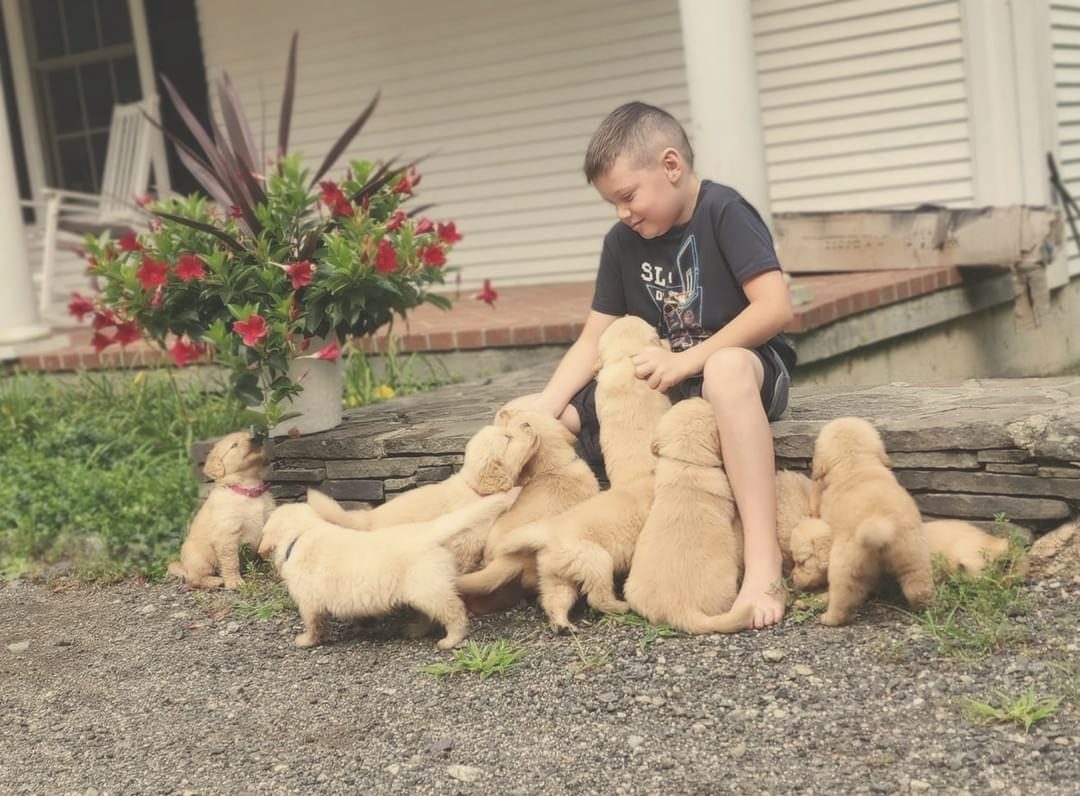
It means the records keep getting written, so the next steward inherits knowledge instead of guesswork. It means the mentors keep teaching, so the knowledge that doesn’t fit in a database survives too. It means a kid sitting in a whelping box today — learning to be gentle, learning what all this care looks like up close — grows up understanding that a breed is something you keep, not something you have.
A line is not a luxury good. It’s a living archive with a heartbeat. Somebody kept it for a hundred years so it could reach us.
Keeping it going — that’s the work. That’s the message. The line continues, because someone continues it.
Carry the message Every Bred By Co. piece funds this education work.
Shop Bred By Co.